
In today’s digital-first world, having a website is essential for businesses of all sizes. Whether you’re launching an online store, a business website, or a personal blog, choosing the right web hosting service can significantly impact your website’s performance, security, and user experience.
One of the most common questions website owners face is: Should I choose Shared Hosting or Dedicated Hosting? Understanding the differences between these hosting options can help you make the right decision for your business goals and budget.
In this comprehensive guide, we’ll break down everything you need to know about shared hosting and dedicated hosting, including their advantages, disadvantages, costs, and ideal use cases.
What Is Web Hosting?
Web hosting is a service that allows individuals and businesses to publish their websites on the internet. A hosting provider stores your website’s files, databases, and content on servers that are accessible online.
Whenever someone enters your website URL, the hosting server delivers the website content to the visitor’s browser.
The type of hosting you choose directly affects:
- Website speed
- Security
- Reliability
- Scalability
- User experience
- SEO performance
What Is Shared Hosting?
Shared hosting is the most affordable and beginner-friendly hosting option available.
In a shared hosting environment, multiple websites share the same server resources, including:
- CPU
- RAM
- Storage
- Bandwidth
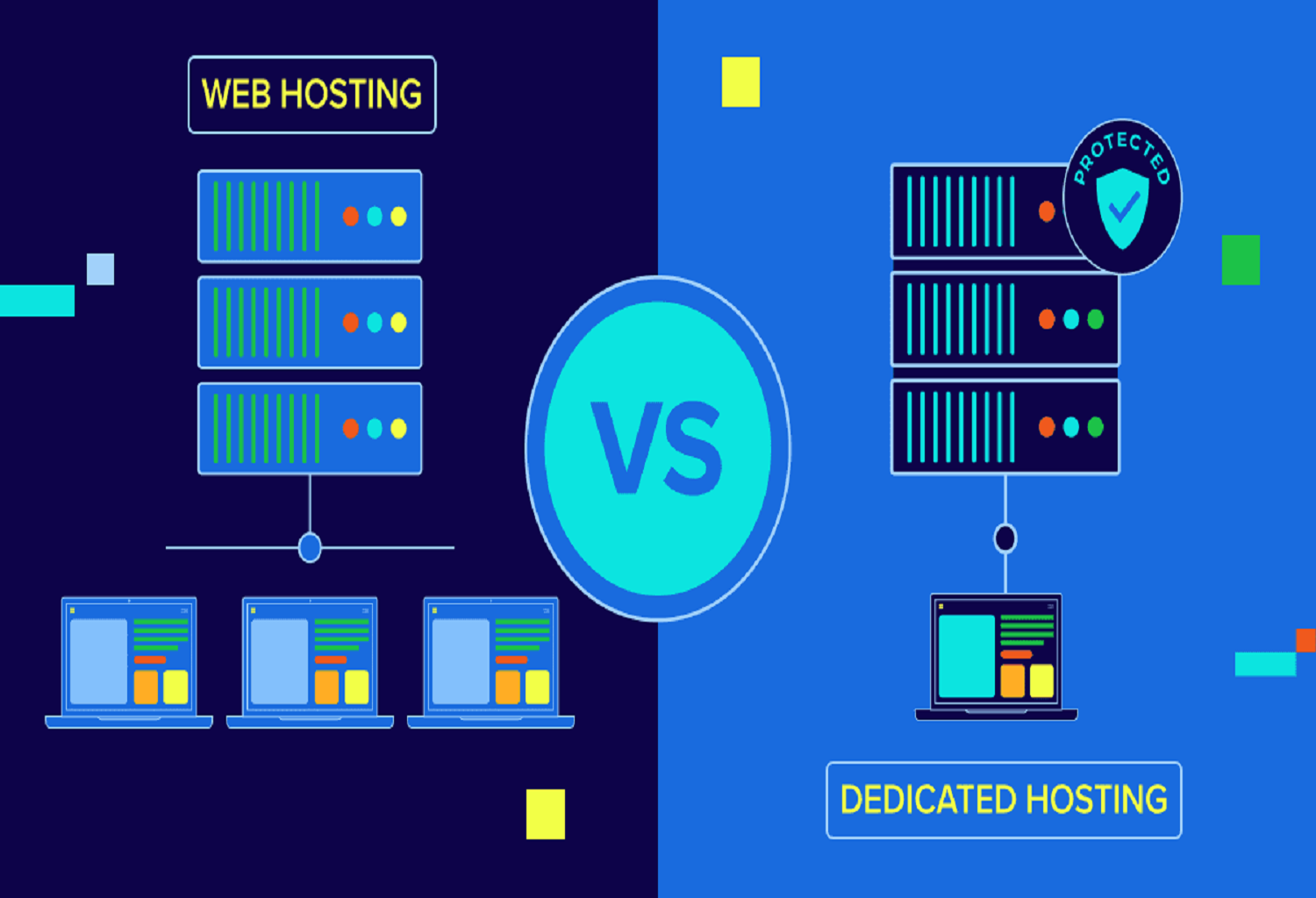
Think of shared hosting like living in an apartment building where multiple residents share common resources.
Advantages of Shared Hosting
1. Cost-Effective
Shared hosting is significantly cheaper than dedicated hosting, making it ideal for startups, bloggers, and small businesses.
2. Easy to Manage
Most hosting providers offer user-friendly control panels and automated maintenance.
3. Beginner Friendly
No technical expertise is required to manage a shared hosting account.
4. Quick Setup
You can launch your website within minutes without dealing with server configurations.
Disadvantages of Shared Hosting
1. Limited Performance
Since resources are shared among multiple websites, traffic spikes on one website can affect others.
2. Reduced Security
Although hosting providers implement security measures, shared environments can be more vulnerable to attacks.
3. Limited Customization
Users have limited control over server settings and software installations.
4. Scalability Challenges
As your website grows, shared hosting may struggle to handle increased traffic.
What Is Dedicated Hosting?
Dedicated hosting provides an entire physical server exclusively for your website or business applications.
Unlike shared hosting, you don’t share resources with other users.
Think of dedicated hosting as owning a private house where all resources belong solely to you.
Advantages of Dedicated Hosting
1. Superior Performance
Since all server resources are dedicated to your website, performance remains fast and consistent even during traffic surges.
2. Enhanced Security
Dedicated servers offer greater isolation and advanced security controls.
3. Full Control
You can customize server settings, operating systems, and software according to your needs.
4. Better Reliability
Dedicated hosting minimizes downtime and ensures stable website performance.
5. Excellent Scalability
Businesses can configure resources to support growing traffic and complex applications.
Disadvantages of Dedicated Hosting
1. Higher Cost
Dedicated hosting is considerably more expensive than shared hosting.
2. Technical Knowledge Required
Managing a dedicated server often requires advanced technical expertise unless you choose managed hosting services.
3. Maintenance Responsibilities
Server updates, monitoring, and troubleshooting may become your responsibility.
Shared Hosting vs Dedicated Hosting: Key Comparison
| Feature | Shared Hosting | Dedicated Hosting |
|---|---|---|
| Cost | Low | High |
| Performance | Moderate | Excellent |
| Security | Basic | Advanced |
| Scalability | Limited | High |
| Customization | Restricted | Full Control |
| Resource Availability | Shared | Exclusive |
| Technical Expertise | Minimal | Moderate to High |
| Best For | Small Websites | Large Businesses |
Which Hosting Option Is Best for Small Businesses?
For startups, local businesses, and personal websites, shared hosting is often sufficient.
Choose shared hosting if:
- Your website receives low to moderate traffic
- You’re working with a limited budget
- You need a simple website
- You don’t require advanced server customization
Examples include:
- Personal blogs
- Portfolio websites
- Small business websites
- Local service providers
When Should You Upgrade to Dedicated Hosting?
As your business grows, your hosting needs will evolve.
Consider dedicated hosting when:
Your Website Gets High Traffic
If thousands of visitors access your website daily, dedicated hosting ensures smooth performance.
You Run an E-Commerce Store
Online stores handle sensitive customer information and payment transactions that require enhanced security.
You Need Maximum Uptime
Businesses that rely heavily on their websites cannot afford frequent downtime.
You Use Resource-Intensive Applications
Applications such as CRM systems, SaaS platforms, and large databases perform better on dedicated servers.
Impact of Hosting on SEO
Many website owners overlook how hosting affects search engine rankings.
Faster Loading Speed
Google prioritizes websites that load quickly. Dedicated hosting generally offers better speed and performance.
Better User Experience
Fast-loading websites reduce bounce rates and improve visitor engagement.
Improved Website Uptime
Frequent downtime can negatively impact SEO rankings and customer trust.
Enhanced Security
Secure websites are favored by both search engines and users.
Choosing the right hosting plan can contribute significantly to your overall SEO strategy.
How to Choose the Right Hosting Solution
Before selecting a hosting plan, ask yourself the following questions:
What Is My Budget?
If you’re just starting out, shared hosting may be the most practical option.
How Much Traffic Do I Expect?
High-traffic websites generally benefit from dedicated hosting.
Do I Need Advanced Security?
Businesses handling customer data should prioritize security-focused hosting solutions.
Will My Website Grow?
Choose a hosting provider that allows seamless upgrades as your business expands.
Final Thoughts
Both shared hosting and dedicated hosting serve important purposes in the web hosting ecosystem.
Shared Hosting is an excellent choice for beginners, startups, and small businesses looking for affordable website hosting solutions.
Dedicated Hosting is ideal for established businesses, high-traffic websites, and organizations requiring superior performance, security, and control.
The best hosting solution depends on your website’s size, traffic, budget, and future growth plans. By understanding the differences between shared and dedicated hosting, you can make an informed decision that supports your business goals and online success.
📞 Get FREE Consultation
Need help choosing the right web hosting solution for your website or business?
Call / WhatsApp: 8077671794
Whether you’re launching a new website or upgrading an existing one, our experts can help you select the best hosting option for performance, security, and scalability.
Get the Best Web Hosting & Website Development Services in Noida
Facing slow website performance, downtime issues, or hosting confusion? Don’t wait.
📞 Call / WhatsApp: 8077671794
🌐 Visit: thinkprimedigital.com
👇 Fill the enquiry form below for:
✔ Free consultation
Contact Details – ThinkPrime Digital
Address: O-789, Gaur City Center, Noida
Call/WhatsApp: +91-8077671794
Email: email@thinkprimedigital.com
Website: www.thinkprimedigital.com
Our Services: https://thinkprimedigital.com/service.html